




Caller ID
What is Caller ID?
Caller ID is a service provided by telephone companies that allows the caller’s telephone number to be displayed on the called party’s telephone or caller ID device. This service allows the recipient of a call to see the telephone number of the person or organization calling them, even if the caller has blocked their number or is using a private number. Caller ID also plays a role in automated outbound calling — BSG's Conversational AI Voice presents a consistent caller identity so recipients know who is calling.
Caller ID can also include the name of the caller, if it is available and has been provided by the caller’s telephone company.
On business lines, Caller ID is often paired with a push notification or SMS alert so the call is logged even if it goes unanswered. For real-world context, see BSG's OTP SMS vs. Flash Calls: Multi-Factor Authentication Solutions Compared.
How does caller ID work?
Caller ID works by transmitting the caller’s phone number to the called party’s phone before the call is answered. The caller’s phone number is sent as part of the call setup information, which is displayed on the called party’s phone.
Can caller ID be blocked?
Yes, caller ID can be blocked by dialing *67 before making a call. This code tells the phone network to block the caller’s phone number from being transmitted to the called party.
Can caller ID be faked?
Yes, caller ID can be faked using spoofing technology. Spoofing is when someone uses a fake phone number to make it appear as if they are calling from a different number.
What is a Caller ID display?
A Caller ID display is a device or feature on a telephone or other communication device that displays the caller’s phone number when they call.
Is Caller ID included with all phone plans?
Caller ID is not always included with all phone plans, but it is widely available as an add-on feature.
Can you see caller ID on a blocked number?
If the number is blocked, the caller’s ID will not appear on the caller ID display. However, it will still show on the phone bill as a blocked call.
Is Caller ID only for landline phones?
Caller ID is available for both landline and mobile phones.
How accurate is Caller ID?
Caller ID can be fairly accurate, but it is not always 100% accurate. Spoofing and other technical issues can cause the caller’s ID to be inaccurate or false.


Interested in a special offer?
Ready to reach further?
Let’s talk


Related Terms
Explore BSG Solutions
Useful Materials
![WhatsApp Business API: Complete Guide — Setup, Pricing, Use Cases [2026]](/assets/img/blog/whatsapp-business-api-setup-pricing-use-cases-guide_avatar.jpg)
WhatsApp Business API for 2026 — setup steps, the new per-message pricing model, and proven use cases by industry.
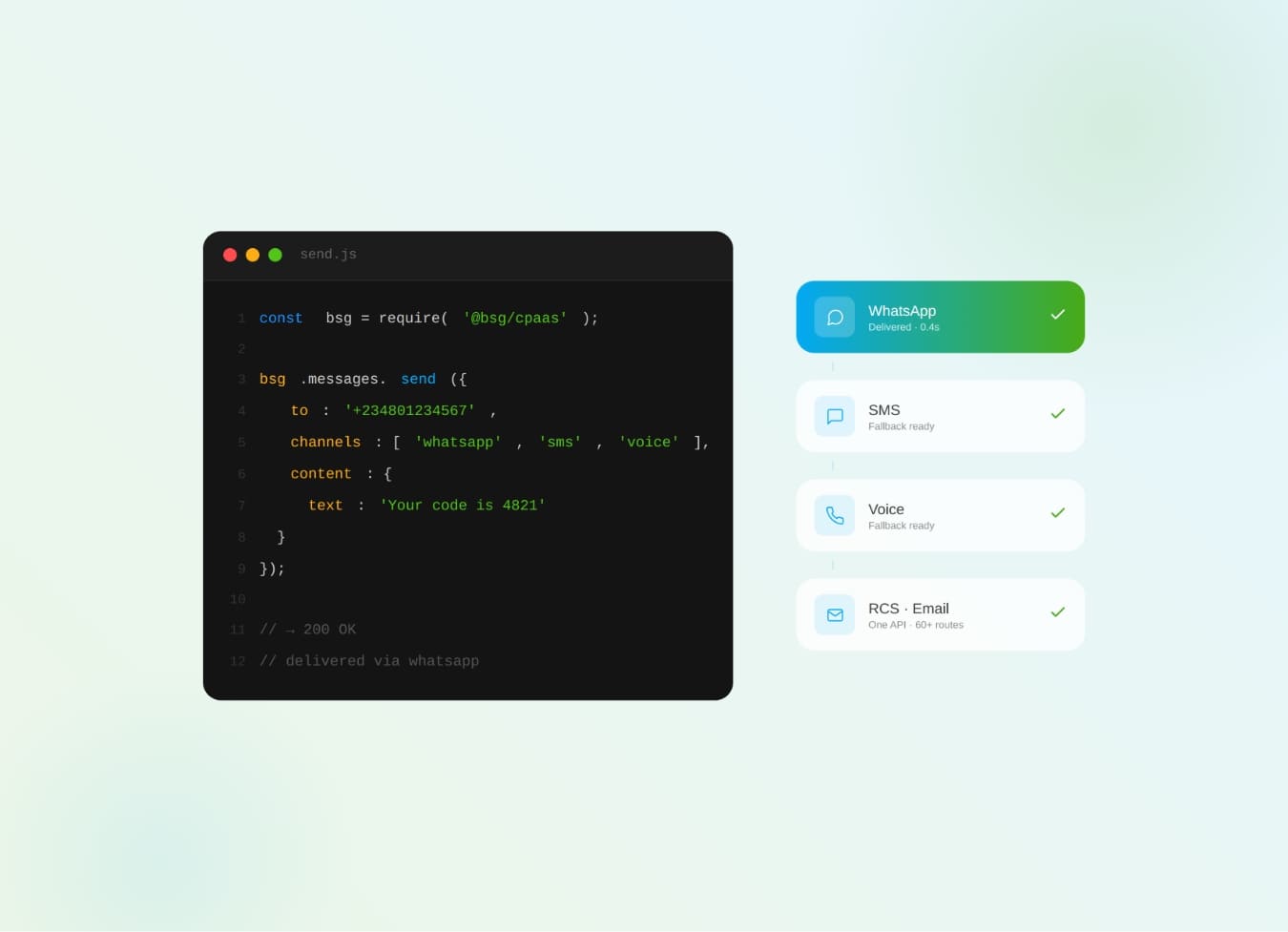
What is CPaaS? The cloud API layer that adds SMS, WhatsApp, voice & OTP to your apps — how it works and why it beats a multi-vendor stack.
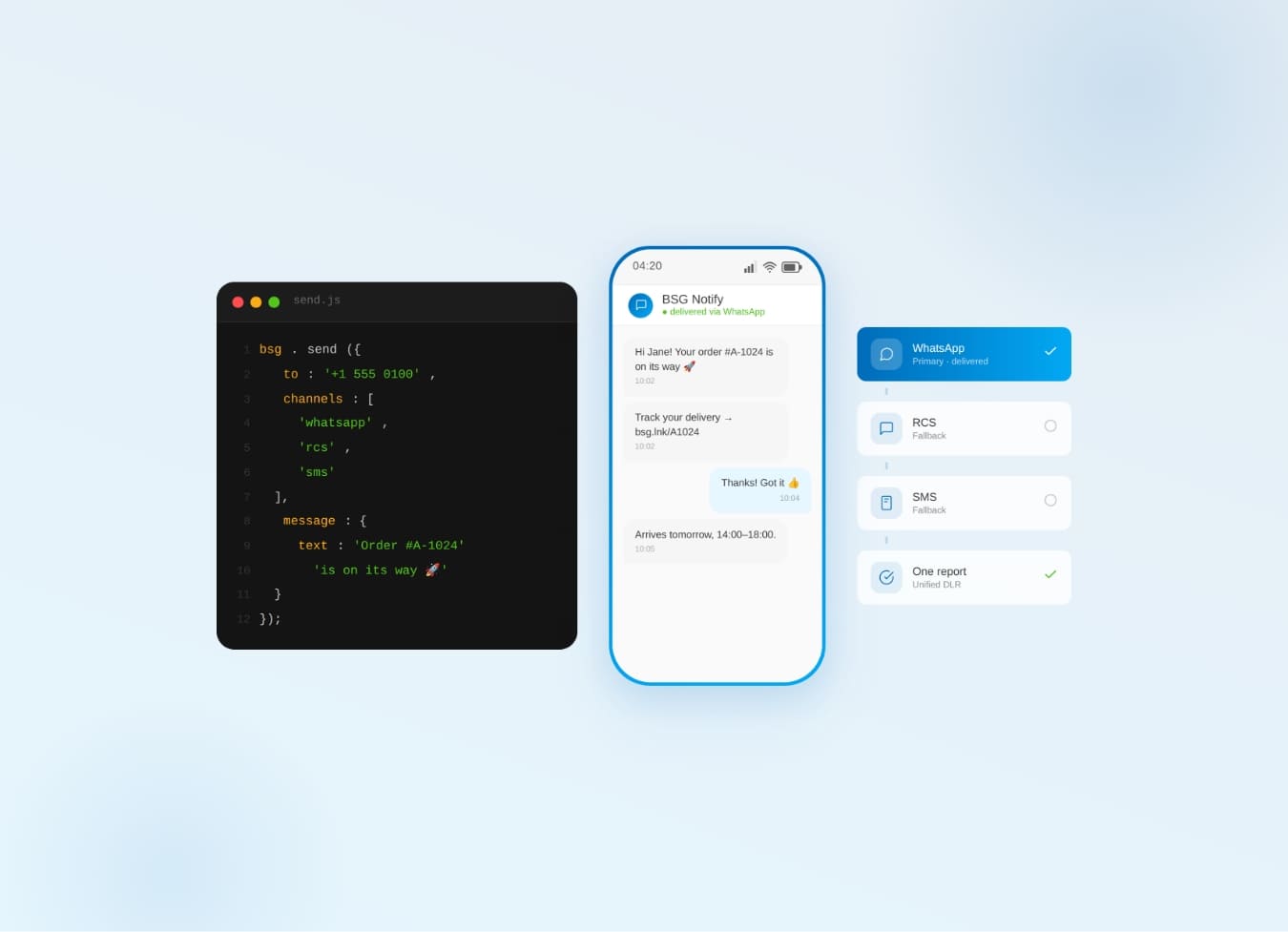
Why one communication API for SMS, WhatsApp, Viber & RCS beats five separate integrations — cascade fallback, unified reports.