




Push Notifications
What are Push Notifications?
Push notifications are messages that appear on a device’s notification area or home screen. Apps use them to alert users about events, updates, or other interesting information. Push notifications can be sent anytime, even when the user is not actively using the app.
Push notifications are a great way to keep users engaged with an app. They can be used to alert users to important news, updates, and other information that may be of interest. They can also be used to remind users to complete tasks, or to encourage them to explore new features.
Push notifications can be tailored to each user’s needs, and sent at any time, even when the user is not actively using the app. They can also be used to increase user engagement with an app, as users can be prompted to take action when they receive a notification.
That fallback logic is the same idea behind an app notification strategy that mixes channels instead of relying on just one. For real-world context, see BSG's How Can You Use OTP via SMS to Improve Customer Service & Privacy?.
How does this work?
Push notifications are typically sent through a push notification service, such as Apple Push Notifications (APNs) or Google Cloud Messaging (GCM). When a user has an app installed on their device, the app can register with the service, and when the app needs to send a notification, it can contact the service and provide the necessary information. The service then sends the notification to the user’s device. The device then displays the notification on the user’s notification area or home screen.
The catch is that push notifications only reach users who have the app installed and notifications enabled — which is why many businesses pair them with SMS as a fallback channel for time-sensitive alerts like order updates or one-time codes.


Interested in a special offer?
Ready to reach further?
Let’s talk


Related Terms
Explore BSG Solutions
Useful Materials
![WhatsApp Business API: Complete Guide — Setup, Pricing, Use Cases [2026]](/assets/img/blog/whatsapp-business-api-setup-pricing-use-cases-guide_avatar.jpg)
WhatsApp Business API for 2026 — setup steps, the new per-message pricing model, and proven use cases by industry.
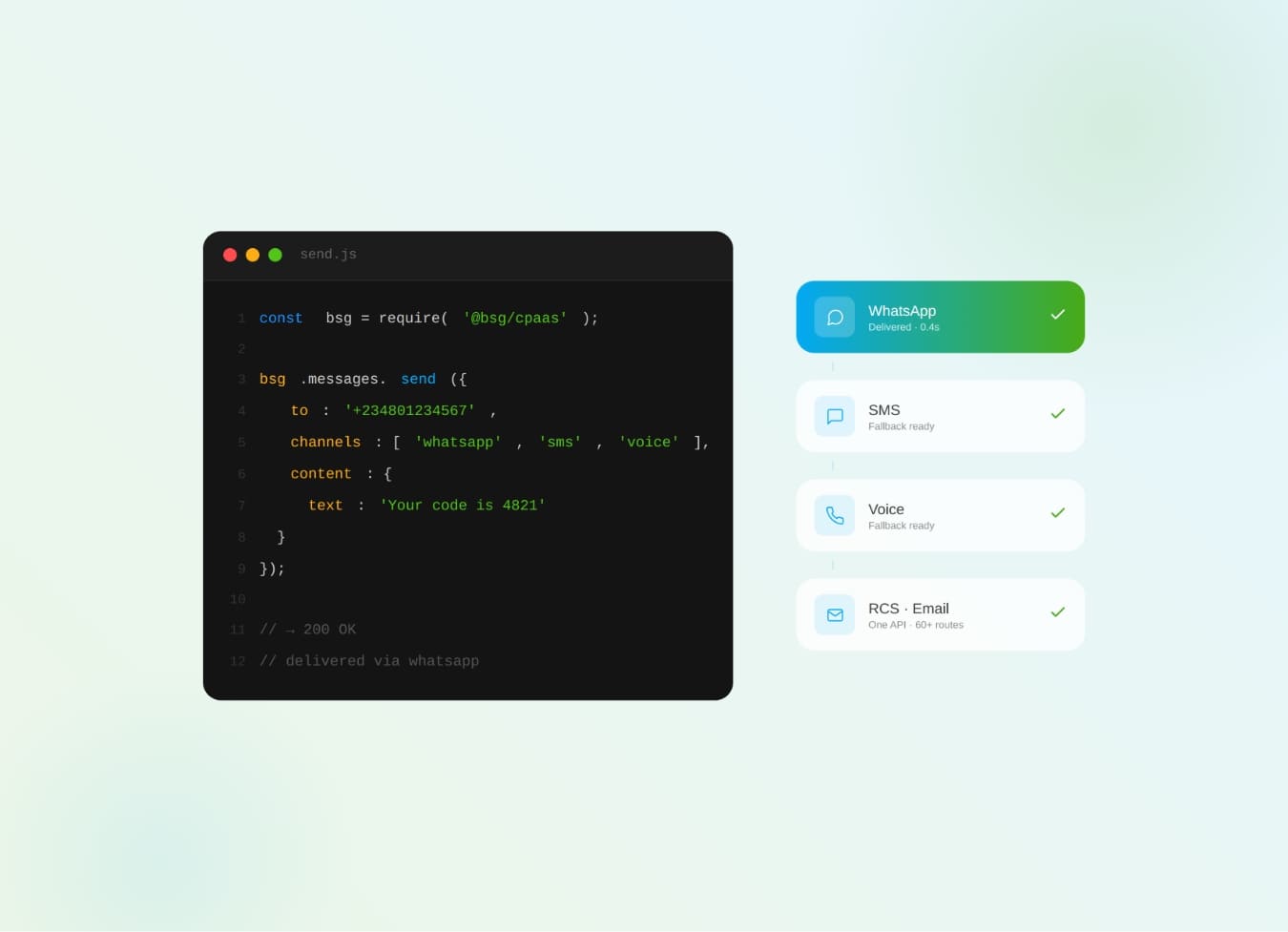
What is CPaaS? The cloud API layer that adds SMS, WhatsApp, voice & OTP to your apps — how it works and why it beats a multi-vendor stack.
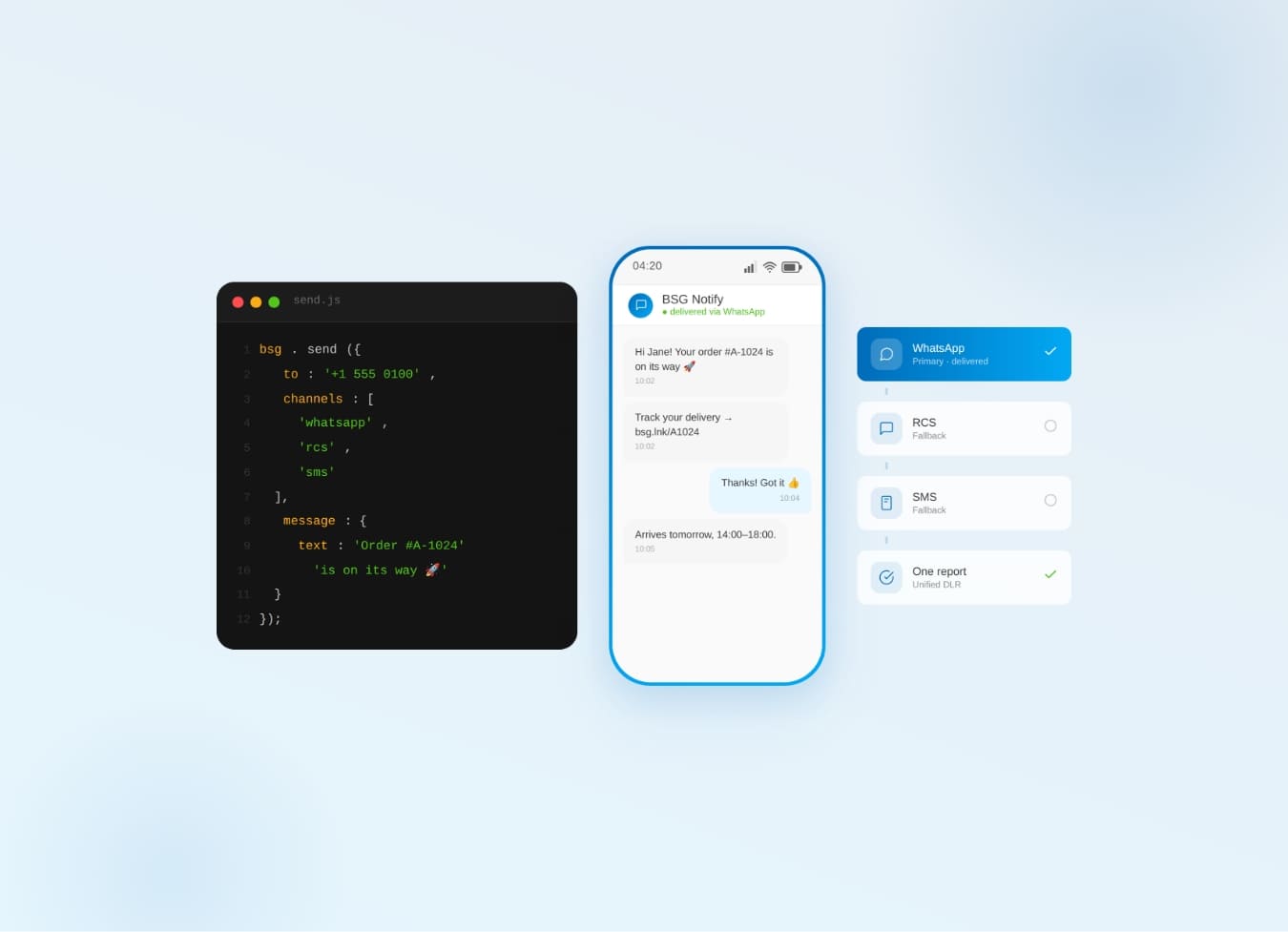
Why one communication API for SMS, WhatsApp, Viber & RCS beats five separate integrations — cascade fallback, unified reports.