




3G Mobile Connection
What is 3G connection?
The third-generation of access technology, or 3G connectivity, allows mobile phones to connect to the internet regardless of location. Every new generation of technology brings new frequency bands and faster transmission rates. In the 1990s, second-generation networking made text messaging possible. This groundbreaking advancement enhanced connection stability and paved the way for later generations of 3G and 4G technologies. For businesses, the practical impact of network generations shows up in message delivery — tools like BSG's Number Verifier confirm which network a subscriber's number is active on before you send.
In 2001, 3G connection-based networks were launched, sparking the widespread use of the internet on mobile phones. Subsequently, mobile phones with all the capabilities of a computer were made available, providing users with unprecedented convenience.
This is explored further in BSG's How Does the SMS API Work and What Are the Benefits?.
What is the operational mechanism of 3G technology?
3G architecture provides a dependable and fairly swift connection over long distances. Signals are transferred through a network of phone towers, from which data is sent to the user’s mobile device. While it may not appear complex, 3G technology was revolutionary when it was first introduced.
What is the basics of 3G network speed?
In comparison to the previous generations of technology, such as 2.5G which offered internet access, 3G has increased the speed of data transferring significantly. This speed enables users to stream music and video without interruption. Furthermore, this technology is adequate enough to provide stable support for remote collaboration tools such as Unified Communications and to provide clear telephone calls.
Approximate download and upload speeds of 3G are estimated to reach 7.2 Mbps and 2 Mbps, respectively. These figures may not seem impressive in relation to 4G or 5G networks, yet there are times when 4G is not available, in which case 3G is the standard alternative.
Generally, 3G networks provide a reliable connection for making phone calls, surfing the web, and streaming audio and video.
Will 3G cellular phones remain operational in 2023?
By 2023, several established wireless networks operated by major US carriers will be discontinued. In addition to T-Mobile ceasing all support for Sprint 4G LTE handsets, AT&T, T-Mobile, and Verizon have also terminated their obsolete 3G networks. This outage will affect any hardware that relies on a legacy 3G connection and will also affect older Sprint 4G LTE devices that are still covered by the T-Mobile network.
Can you still access 3G?
Not all smartphones have abandoned the 3G network; some mobile phones still maintain support for the connection. Consequently, those with compatible phones can still access a 3G network.
Which providers still offer 3G services?
Operators such as Airtel, Idea, Vodafone and others offer 2G, 3G and 4G services, allowing their SIM cards to pick up signals for each of these Gs.


Interested in a special offer?
Ready to reach further?
Let’s talk


Related Terms
Explore BSG Solutions
Useful Materials
![WhatsApp Business API: Complete Guide — Setup, Pricing, Use Cases [2026]](/assets/img/blog/whatsapp-business-api-setup-pricing-use-cases-guide_avatar.jpg)
WhatsApp Business API for 2026 — setup steps, the new per-message pricing model, and proven use cases by industry.
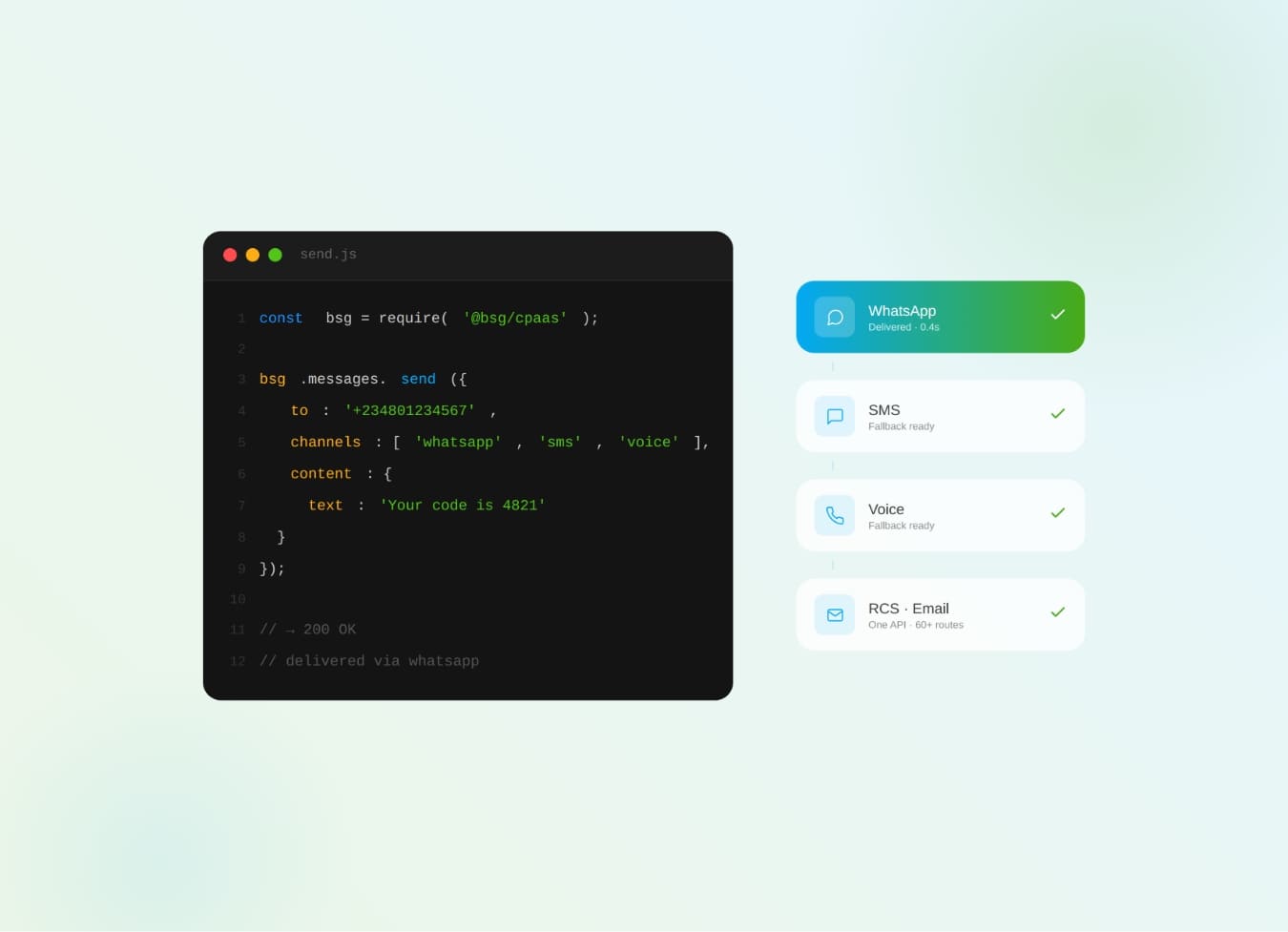
What is CPaaS? The cloud API layer that adds SMS, WhatsApp, voice & OTP to your apps — how it works and why it beats a multi-vendor stack.
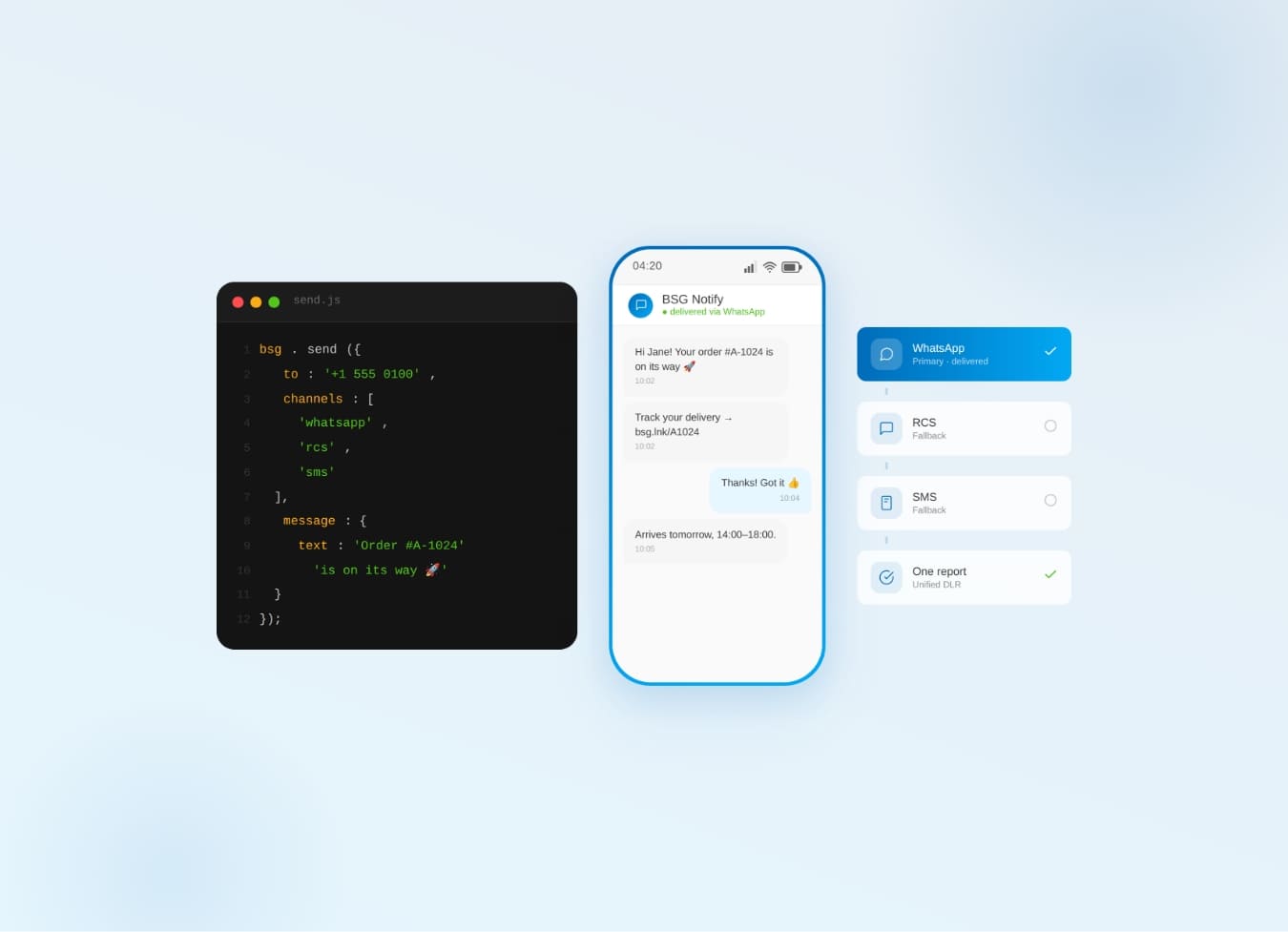
Why one communication API for SMS, WhatsApp, Viber & RCS beats five separate integrations — cascade fallback, unified reports.