




OTP (One-Time PIN) Code
What is OTP (One-Time PIN) Code?
OTP (One-Time PIN) Code is a unique string of characters that is generated as a one-time use code. It is sent via SMS or email to a user when they are trying to log in or perform a secure transaction. It helps to protect users from unauthorized access to their accounts and data.
OTP codes are a secure and reliable way of verifying a user’s identity and preventing unauthorized access to accounts. OTPs provide an additional layer of security beyond traditional passwords, as OTPs are only valid for a single use and expire after a certain amount of time.
This helps to ensure that only authorized users are able to access an account or data and that any attempts to gain access using stolen credentials will be unsuccessful. Additionally, OTPs can be used to confirm a user’s identity when making online purchases or any other secure transaction.
Read more in BSG's Top 5 Reasons for E-commerce Stores to Use SMS One-Time Passwords.
How does it work?
When a user attempts to log in or complete a secure transaction, an OTP code is generated and sent to their registered email address or mobile phone number. The user must then enter the code into the designated field to verify their identity and access their account. Once the code is entered, it is immediately invalidated and a new code is generated for the next transaction.
This ensures that each code can only be used once and provides an extra layer of security to protect accounts from unauthorized access.
What are its uses?
OTP codes can be used to provide an additional layer of security for many online activities, such as logging into accounts, making online purchases, transferring funds, and more. OTPs can also be used for two-factor authentication, which requires users to enter both a password and an OTP code to gain access to an account or perform a secure transaction. This makes it much more difficult for unauthorized users to gain access to accounts and data.


Interested in a special offer?
Ready to reach further?
Let’s talk


Related Terms
Explore BSG Solutions
Useful Materials
![WhatsApp Business API: Complete Guide — Setup, Pricing, Use Cases [2026]](/assets/img/blog/whatsapp-business-api-setup-pricing-use-cases-guide_avatar.jpg)
WhatsApp Business API for 2026 — setup steps, the new per-message pricing model, and proven use cases by industry.
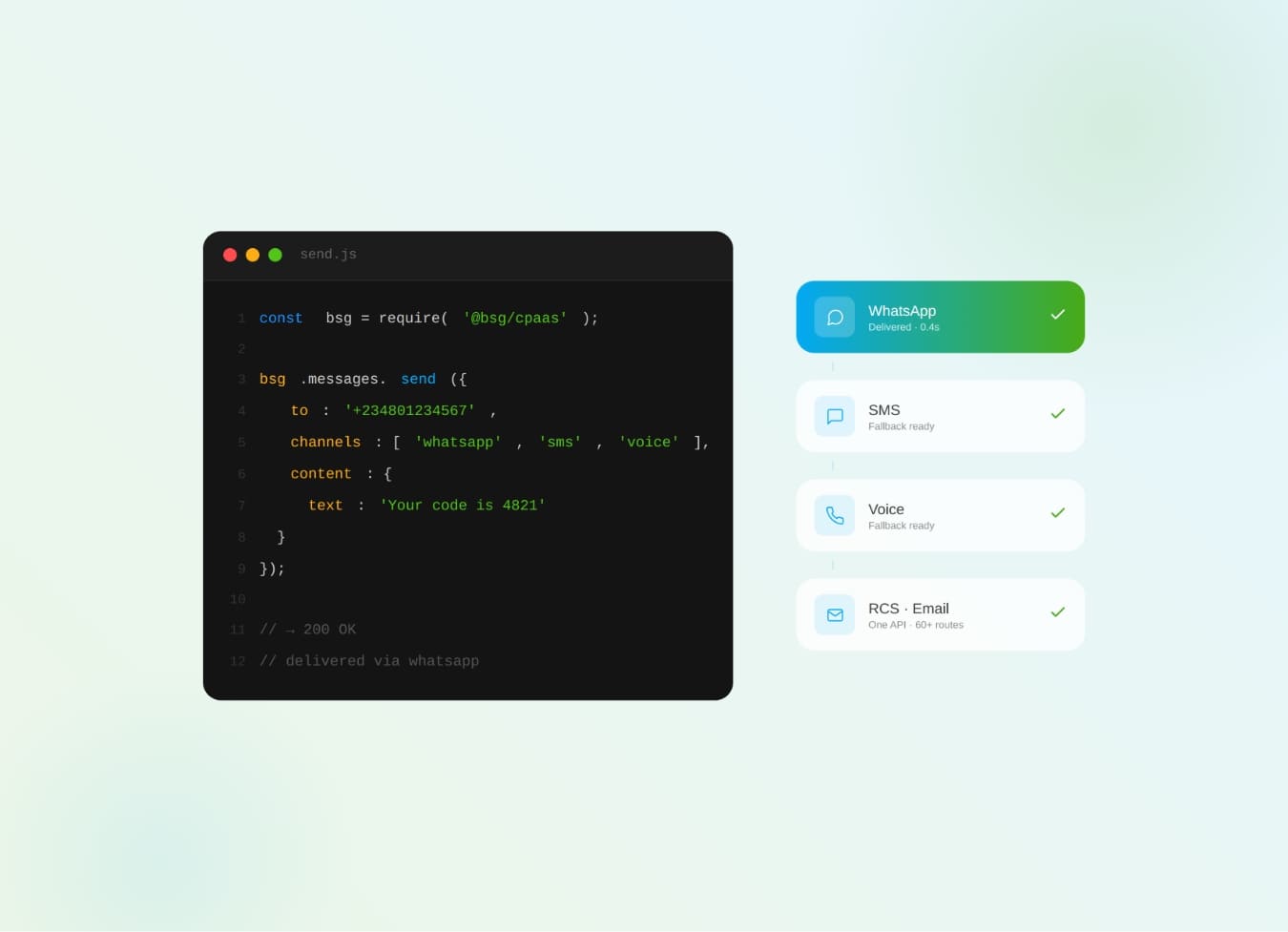
What is CPaaS? The cloud API layer that adds SMS, WhatsApp, voice & OTP to your apps — how it works and why it beats a multi-vendor stack.
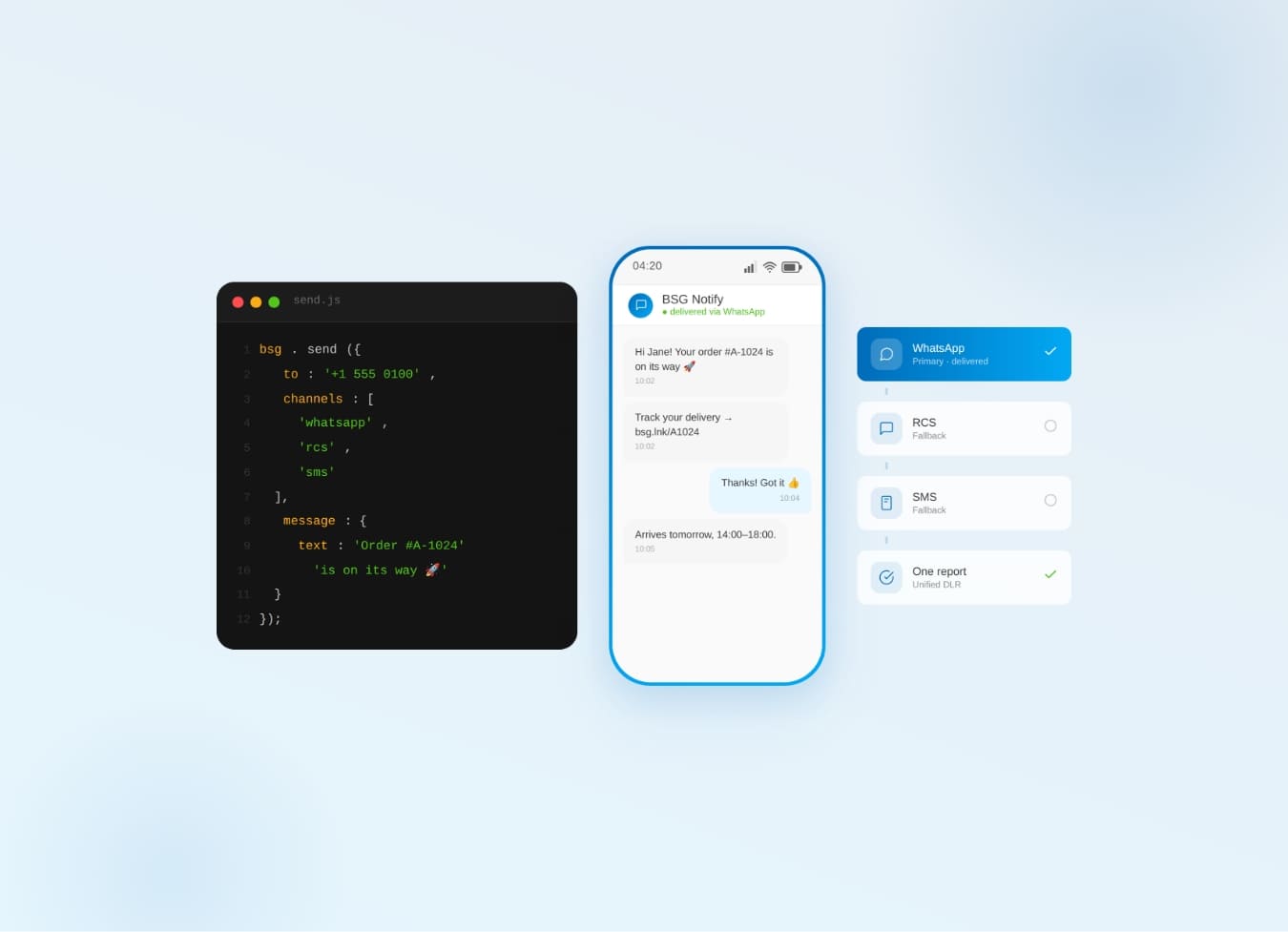
Why one communication API for SMS, WhatsApp, Viber & RCS beats five separate integrations — cascade fallback, unified reports.