




PSTN
What is PSTN?
Public Switched Telephone Network (PSTN) is a worldwide public circuit-switched telephone network that provides voice, data, and other services over the same infrastructure. It is the traditional network used for telephone calls and is also used for other services such as fax, modem, and digital data. PSTN provides a reliable, secure, and cost-effective way to communicate, making it the most widely used form of communication today.
Public Switched Telephone Network (PSTN) is the most widely used form of communication today, allowing for real-time voice communication between two or more parties. It is based on a circuit-switched architecture, meaning that the connection between two points is established before the conversation begins, and is maintained throughout the duration of the call.
PSTN is the foundation of the traditional landline telephone system and is made up of both public and private networks. It allows for a wide variety of services, including voice, data, video, and internet access. The PSTN is made up of copper wires, optical fibers, microwave links, and satellites, and is managed by regional telephone companies, private network operators, and governments. PSTN networks are highly secure and reliable and provide a cost-effective way to communicate.
A VoIP call has to cross into the PSTN the moment either party is using a traditional landline or a mobile number without an internet connection. Read more in BSG's Voice Bot vs. Chatbot: Selecting the Ideal Conversational AI for Your Business.
How does it work?
PSTN connects two or more parties using physical wires and equipment. When a call is placed, the call is routed through a series of switches and routers to locate the caller and the recipient. Once the call is connected, data and voice signals are exchanged between the two parties.


Interested in a special offer?
Ready to reach further?
Let’s talk


Related Terms
Explore BSG Solutions
Useful Materials
![WhatsApp Business API: Complete Guide — Setup, Pricing, Use Cases [2026]](/assets/img/blog/whatsapp-business-api-setup-pricing-use-cases-guide_avatar.jpg)
WhatsApp Business API for 2026 — setup steps, the new per-message pricing model, and proven use cases by industry.
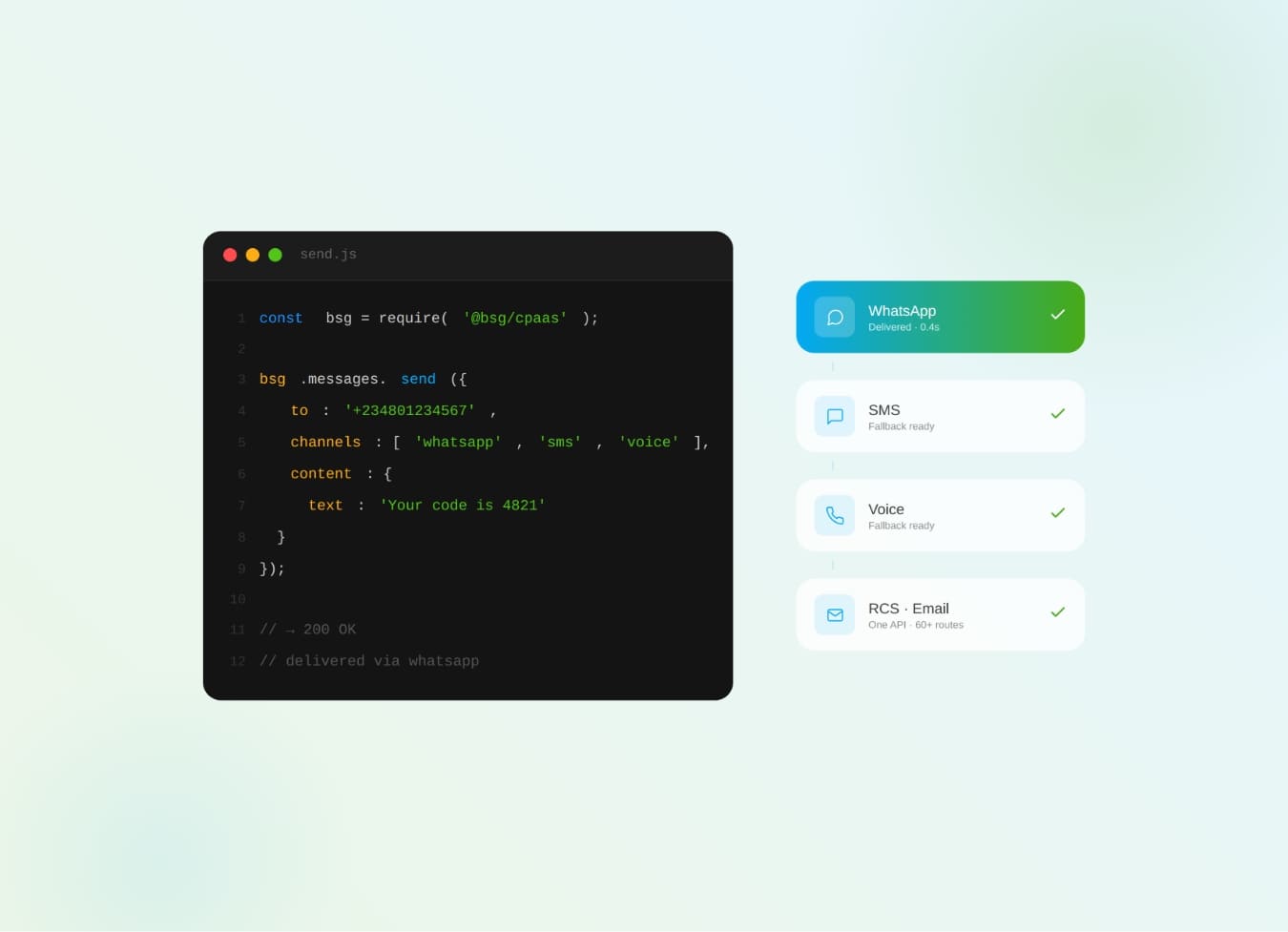
What is CPaaS? The cloud API layer that adds SMS, WhatsApp, voice & OTP to your apps — how it works and why it beats a multi-vendor stack.
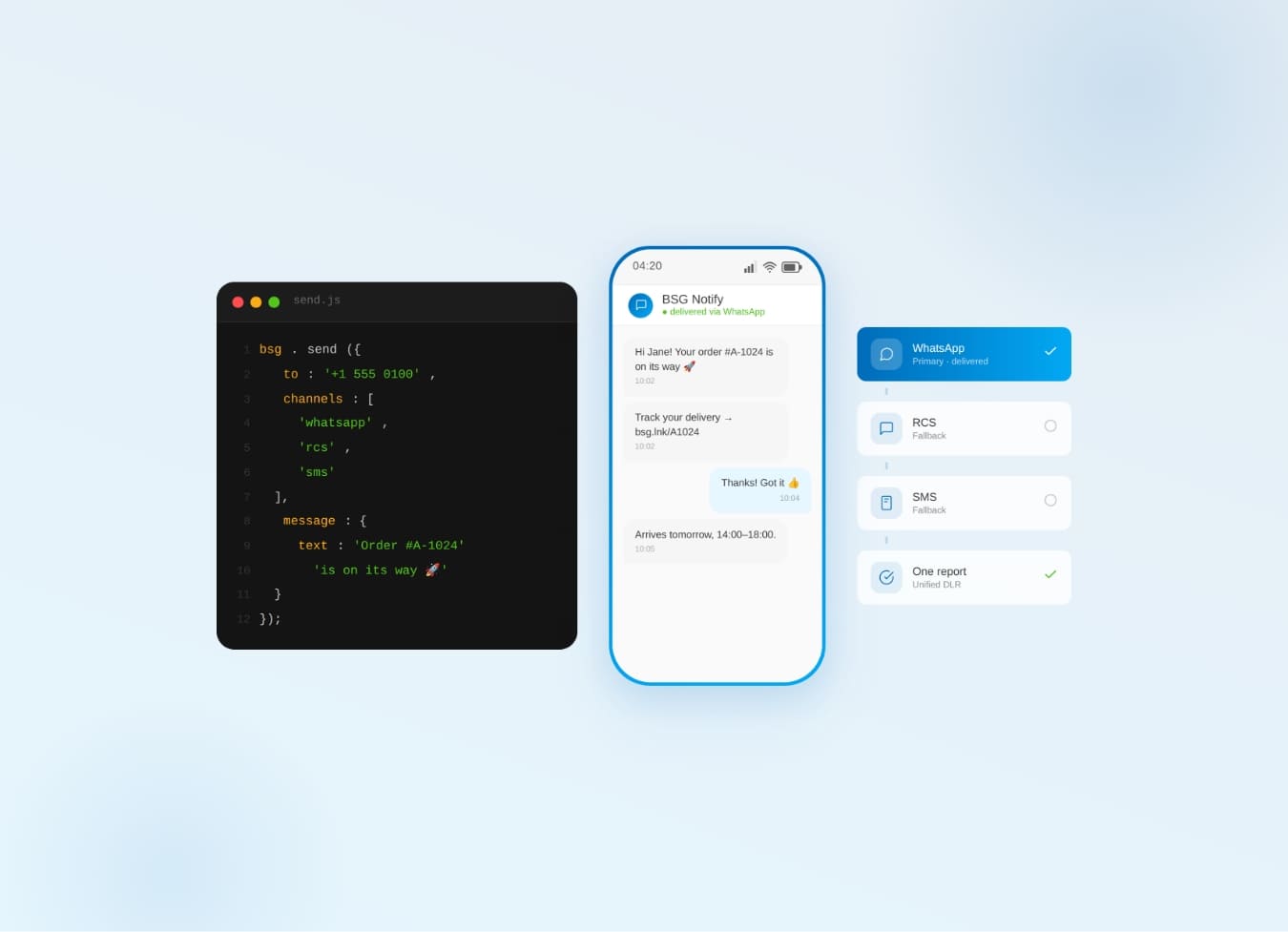
Why one communication API for SMS, WhatsApp, Viber & RCS beats five separate integrations — cascade fallback, unified reports.