




RTP
What is RTP?
Real-time Transport Protocol (RTP) is a network protocol for delivering audio and video over IP networks. RTP is used in communication and entertainment systems that involve streaming media, such as telephony, video teleconference applications, television services, and web-based push-to-talk features. It provides end-to-end network transport functions suitable for applications transmitting real-time data, such as audio, video, or simulation data, over multicast or unicast network services. RTP typically runs over User Datagram Protocol (UDP).
RTP handles the media itself, while a separate protocol like VoIP signaling sets up and tears down the call. For the practical side of this, check out BSG's Voice Bot vs. Chatbot: Selecting the Ideal Conversational AI for Your Business.
How does this work?
RTP works by breaking up data into small packets, which are then sent over the network. When the packets arrive at their destination, they are reassembled in the correct order, allowing for real-time streaming of media.
The protocol also includes features such as error correction and sequence numbering, which ensure that data is transmitted reliably and without interruption. As the packets travel through the network, they can be routed to different destinations and the media can be multicast to multiple recipients.


Interested in a special offer?
Ready to reach further?
Let’s talk


Related Terms
Explore BSG Solutions
Useful Materials
![WhatsApp Business API: Complete Guide — Setup, Pricing, Use Cases [2026]](/assets/img/blog/whatsapp-business-api-setup-pricing-use-cases-guide_avatar.jpg)
WhatsApp Business API for 2026 — setup steps, the new per-message pricing model, and proven use cases by industry.
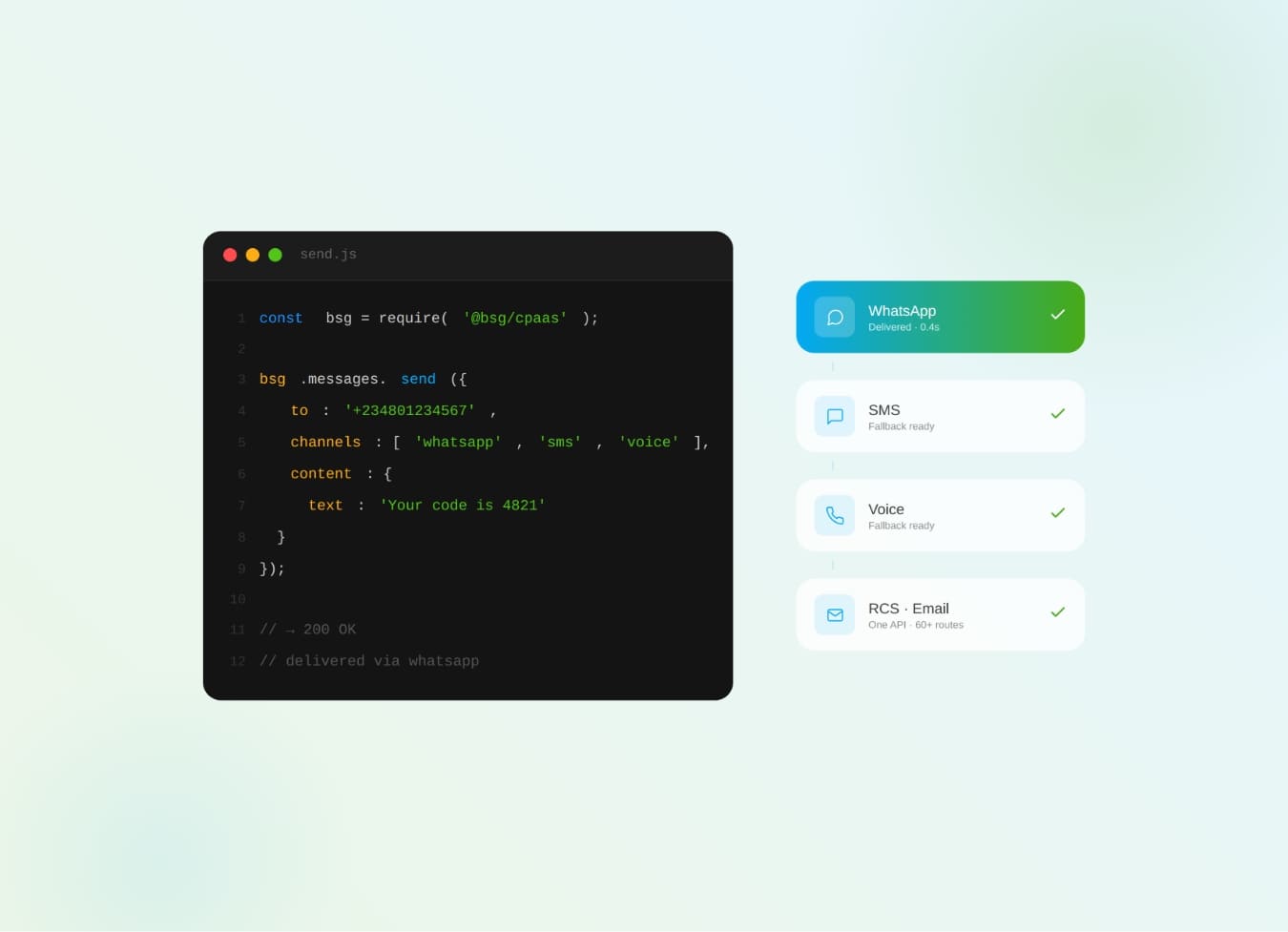
What is CPaaS? The cloud API layer that adds SMS, WhatsApp, voice & OTP to your apps — how it works and why it beats a multi-vendor stack.
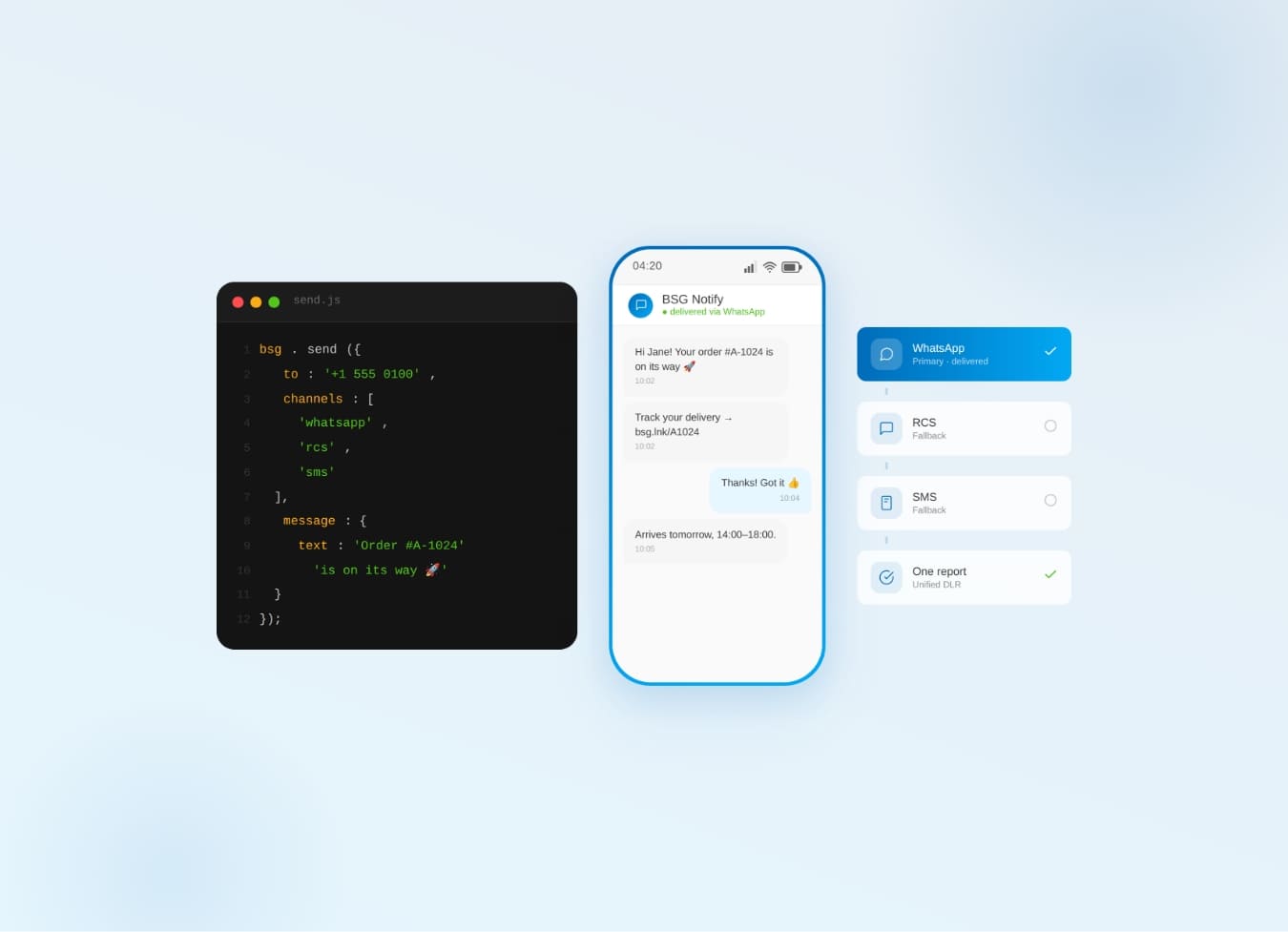
Why one communication API for SMS, WhatsApp, Viber & RCS beats five separate integrations — cascade fallback, unified reports.