




SIP
What is SIP?
Session Initiation Protocol (SIP) is an application layer signaling protocol used in Voice over Internet Protocol (VoIP) communications that are used to initiate, manage, and terminate multimedia sessions such as voice and video calls. SIP is based on a client-server model and is used to establish, modify and terminate two-party or multiparty sessions that involve multimedia elements such as video, voice, chat, and messaging.
SIP enables user agents, such as softphones, to register with a SIP server and send an invitation to another user agent, such as a traditional telephone, to join a session. The invitation includes information such as the types of media that will be used, the IP addresses of the participants, and the timing of the media stream. Upon receiving the invitation, the other user agent can accept or reject the invitation. If accepted, the session is established and the media streams can be exchanged.
SIP is used in conjunction with other protocols such as Real-Time Transport Protocol (RTP) to ensure the smooth delivery of media streams for audio/video calls. It is also used with Session Description Protocol (SDP) which is used to negotiate the types of media that will be exchanged between the two parties.
SIP is an important protocol used in the deployment of VoIP services and is widely used by ISPs and telecommunications companies to offer voice services over the Internet. SIP is also used by applications such as Skype and Google Talk to provide voice and video calling services.
See BSG's Voice Bot vs. Chatbot: Selecting the Ideal Conversational AI for Your Business for a closer look at how this plays out in practice.
How does it work?
SIP works by establishing a session between two or more endpoints. During this session, SIP messages are sent between the endpoints to negotiate the session and to exchange media.
When an endpoint wants to initiate a session, it sends a SIP INVITE message to another endpoint. This message contains information such as the types of media that will be exchanged, the IP addresses of the participants, and the timing of the media stream.
The other endpoint then responds with a SIP 200 OK message which contains information such as the types of media that will be exchanged, the IP addresses of the participants, and the timing of the media stream.
Once the session has been negotiated, the endpoints can exchange media streams. The media is sent over the network using the Real-Time Transport Protocol (RTP).
SIP also provides mechanisms for session management, such as session hold and termination, as well as features such as caller ID and call forwarding.


Interested in a special offer?
Ready to reach further?
Let’s talk


Related Terms
Explore BSG Solutions
Useful Materials
![WhatsApp Business API: Complete Guide — Setup, Pricing, Use Cases [2026]](/assets/img/blog/whatsapp-business-api-setup-pricing-use-cases-guide_avatar.jpg)
WhatsApp Business API for 2026 — setup steps, the new per-message pricing model, and proven use cases by industry.
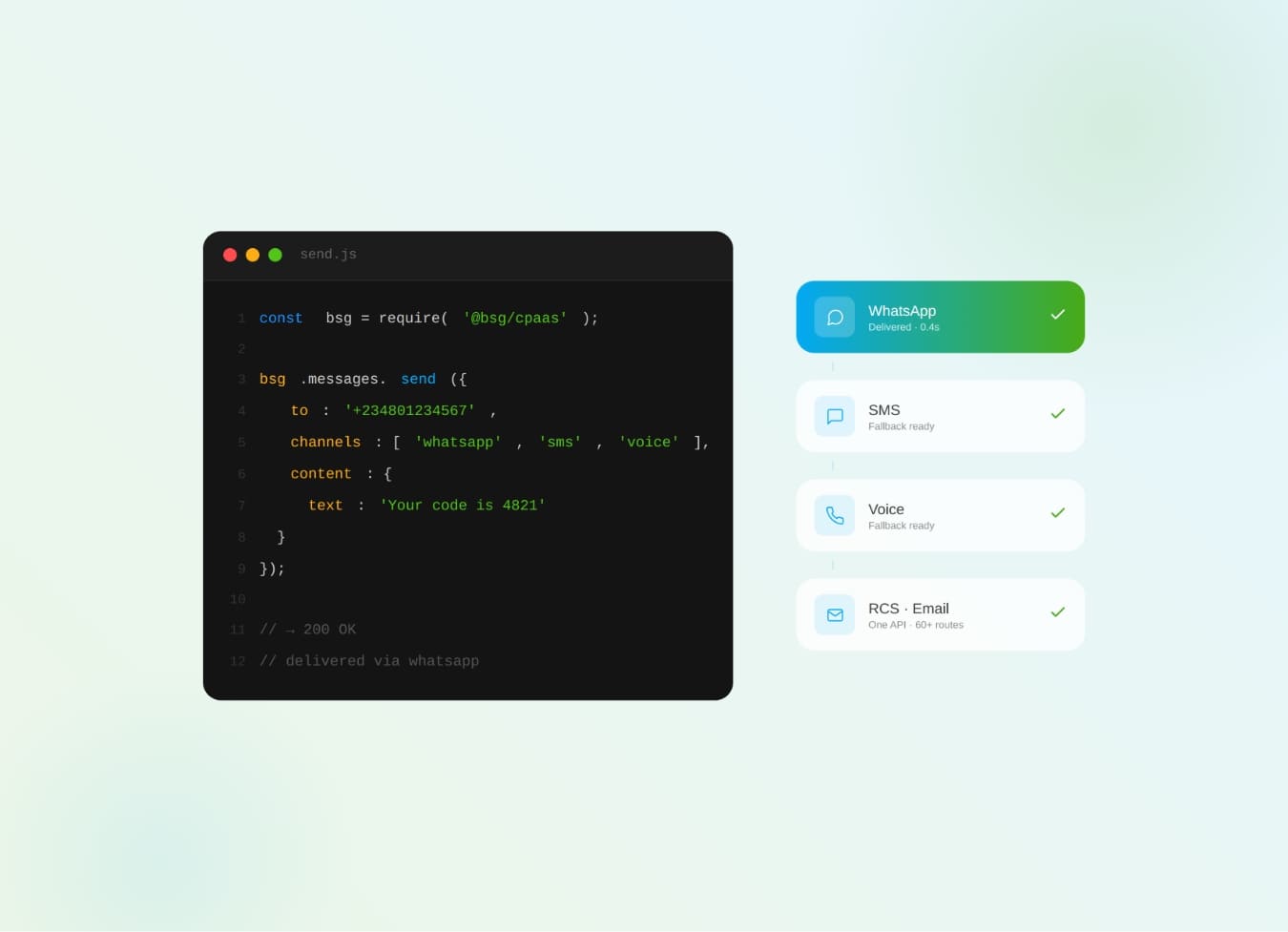
What is CPaaS? The cloud API layer that adds SMS, WhatsApp, voice & OTP to your apps — how it works and why it beats a multi-vendor stack.
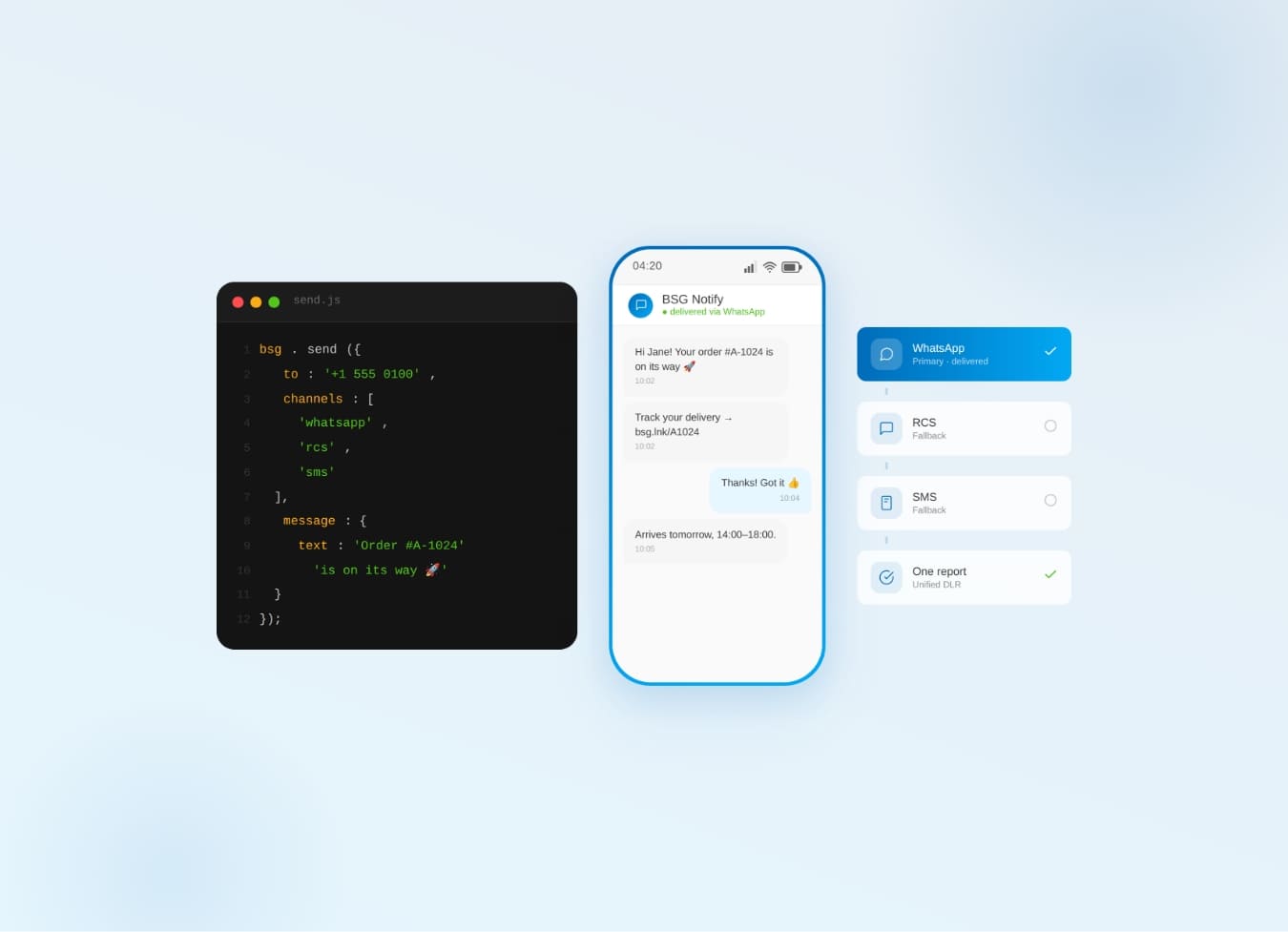
Why one communication API for SMS, WhatsApp, Viber & RCS beats five separate integrations — cascade fallback, unified reports.