




4G Mobile Connection
What is a 4G Mobile Connection?
4G mobile connection is the fourth generation of technology in mobile telecommunications, following 3G. It offers faster data transfer rates and improved network capabilities than its predecessor, 3G. 4G networks can provide wireless data transfer rates of at least 100 Mbit/s, which is significantly faster than 3G. The first 4G networks were introduced in Norway and Sweden in 2009.
4G networks are often called LTE (Long-Term Evolution) networks. LTE is a standard for 4G networks and is the most widely used technology for 4G networks worldwide. 4G LTE networks are designed to provide faster internet speeds, higher capacity, and improved coverage compared to 3G networks.
One of the main benefits of 4G is its speed. 4G networks can provide wireless data transfer rates of at least 100 Mbit/s, which is significantly faster than 3G. This means 4G users can enjoy faster internet browsing, streaming high-definition videos, and online gaming without interruption.
4G networks are also designed to provide higher capacity and improved coverage than 3G networks. This means more users can connect to the network simultaneously and experience faster internet speeds, even in areas with poor coverage.
4G networks are widely available and are used by many mobile phone users worldwide. However, some areas may still have limited 4G coverage. If you’re unsure whether 4G is available in your area, you can check with your mobile service provider.
4G technology is still available and will continue to be available for the foreseeable future. However, it’s worth noting that 5G is the next generation of mobile technology and is slowly being rolled out worldwide. But, 4G networks will continue to be used and maintained for many years.
In conclusion, 4G is the fourth generation of mobile technology that provides faster data transfer rates and improved network capabilities compared to 3G. It’s often referred to as LTE (Long-Term Evolution) and is the most widely used technology for 4G networks worldwide. 4G networks are widely available and will continue to be available for many years to come.
For businesses, the practical impact of network generations shows up in message delivery: BSG's How Does the SMS API Work and What Are the Benefits? explains how SMS travels across these networks, and tools like Number Verifier help confirm which network a subscriber's number is actually active on before you send.
FAQ
Will my 4G phone work in 2022?
4G network is widely available and works on almost all phones now. The network connection is expected to continue working even after the eventual introduction of the 5G connection.
Is 4G no longer available?
4G is still available, and it is expected to always be available for use even after the introduction of the 5G connection
Is 4G the same as LTE?
4G networks are often called LTE (Long-Term Evolution) networks. LTE is a standard for 4G networks and is the most widely used technology for 4G networks worldwide.

Interested in a special offer?
Ready to reach further?
Let’s talk


Related Terms
Explore BSG Solutions
Useful Materials
![WhatsApp Business API: Complete Guide — Setup, Pricing, Use Cases [2026]](/assets/img/blog/whatsapp-business-api-setup-pricing-use-cases-guide_avatar.jpg)
WhatsApp Business API for 2026 — setup steps, the new per-message pricing model, and proven use cases by industry.
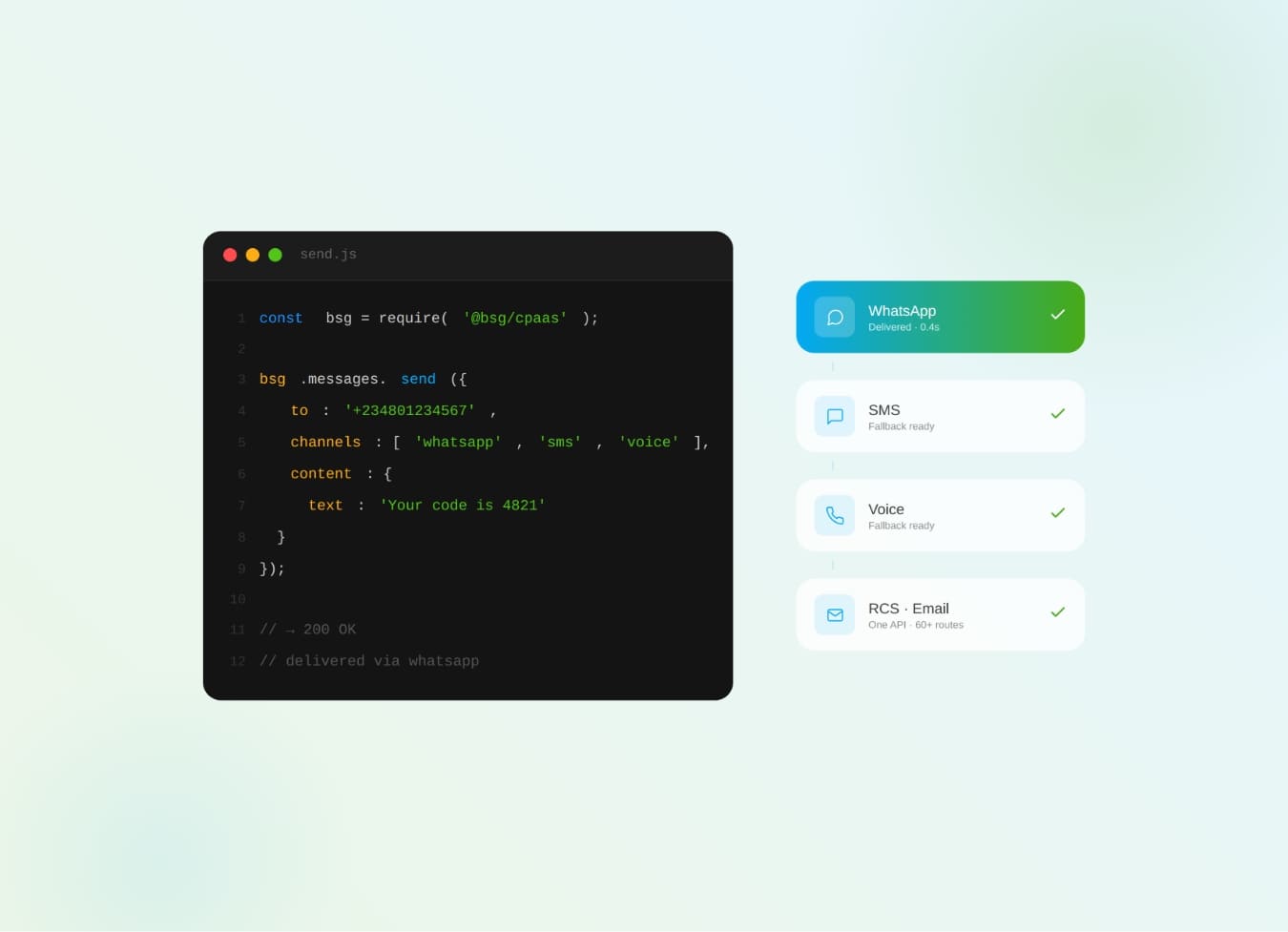
What is CPaaS? The cloud API layer that adds SMS, WhatsApp, voice & OTP to your apps — how it works and why it beats a multi-vendor stack.
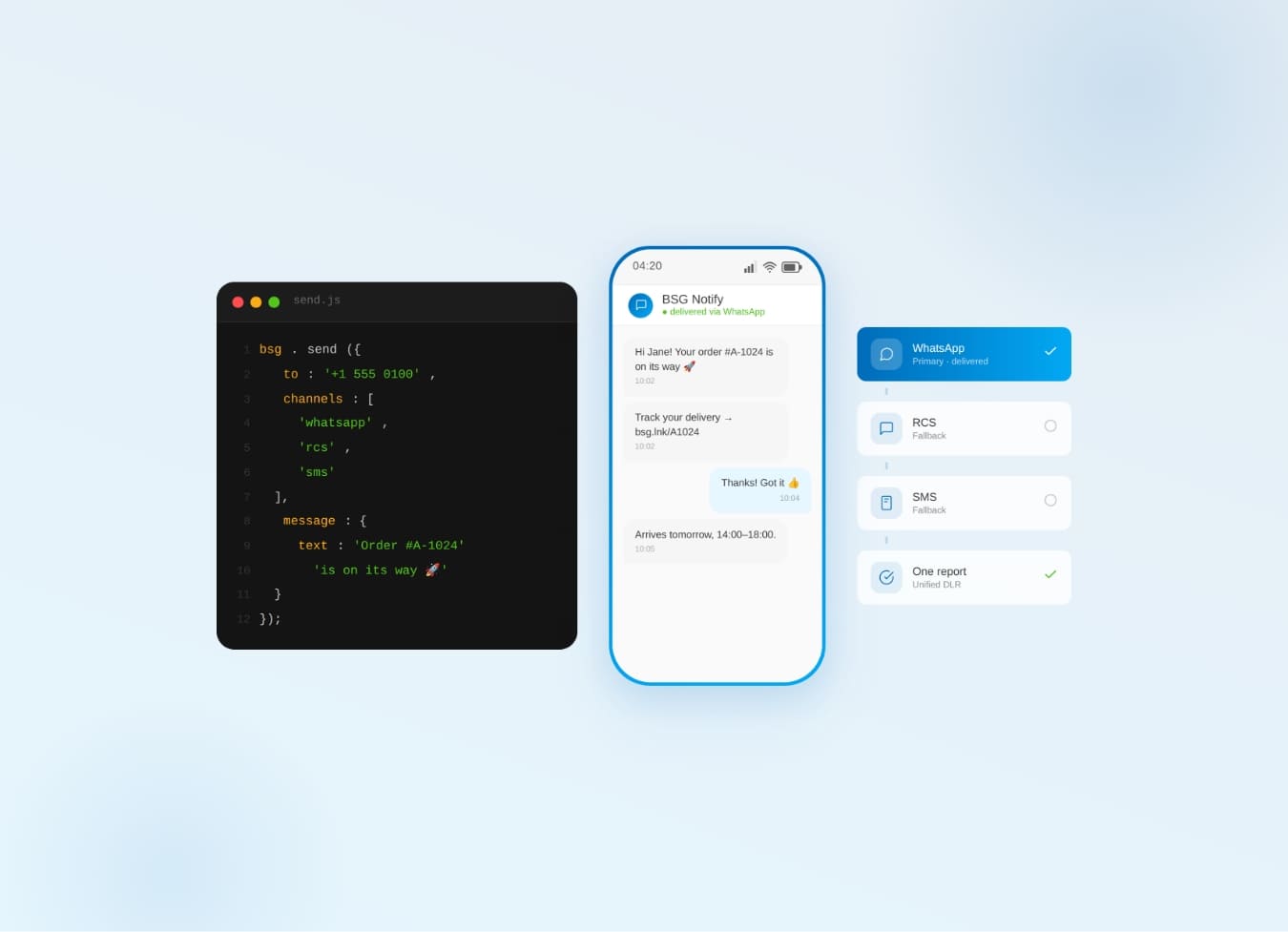
Why one communication API for SMS, WhatsApp, Viber & RCS beats five separate integrations — cascade fallback, unified reports.