




Rich Communication Services (RCS)
Rich Communication Services (RCS) is an advanced messaging protocol designed to enhance traditional SMS with rich, interactive features. Initially developed by the GSM Association (GSMA) in 2007,
RCS messaging
provides a more dynamic communication experience, combining the reliability of SMS with the functionalities of internet-based messaging apps like WhatsApp and Messenger.
It represents the next step in the evolution of SMS, delivering a richer and more interactive communication experience. Unlike SMS, which is confined to 160 characters of plain text, RCS supports a variety of multimedia features. These include high-resolution images, audio, video sharing, read receipts, and typing indicators.
Currently, RCS has full coverage in 10 countries, with others offering either complete support through Google’s RCS services or partial support via local mobile operators. With RCS chat Android accounting for more than 70% of the global market share , using this highly interactive messaging platform is a strategic advantage for engaging users.
How RCS Differs from SMS
You might be wondering why RCS is necessary when we already have SMS . Why not continue using SMS? What sets them apart?
In essence, SMS messaging offers a straightforward, affordable, and basic way to communicate with your customers. Conversely, RCS represents a more sophisticated messaging protocol, enabling a richer, more engaging, and visually appealing communication experience.
To highlight the differences, let’s take a look at the comparison below:
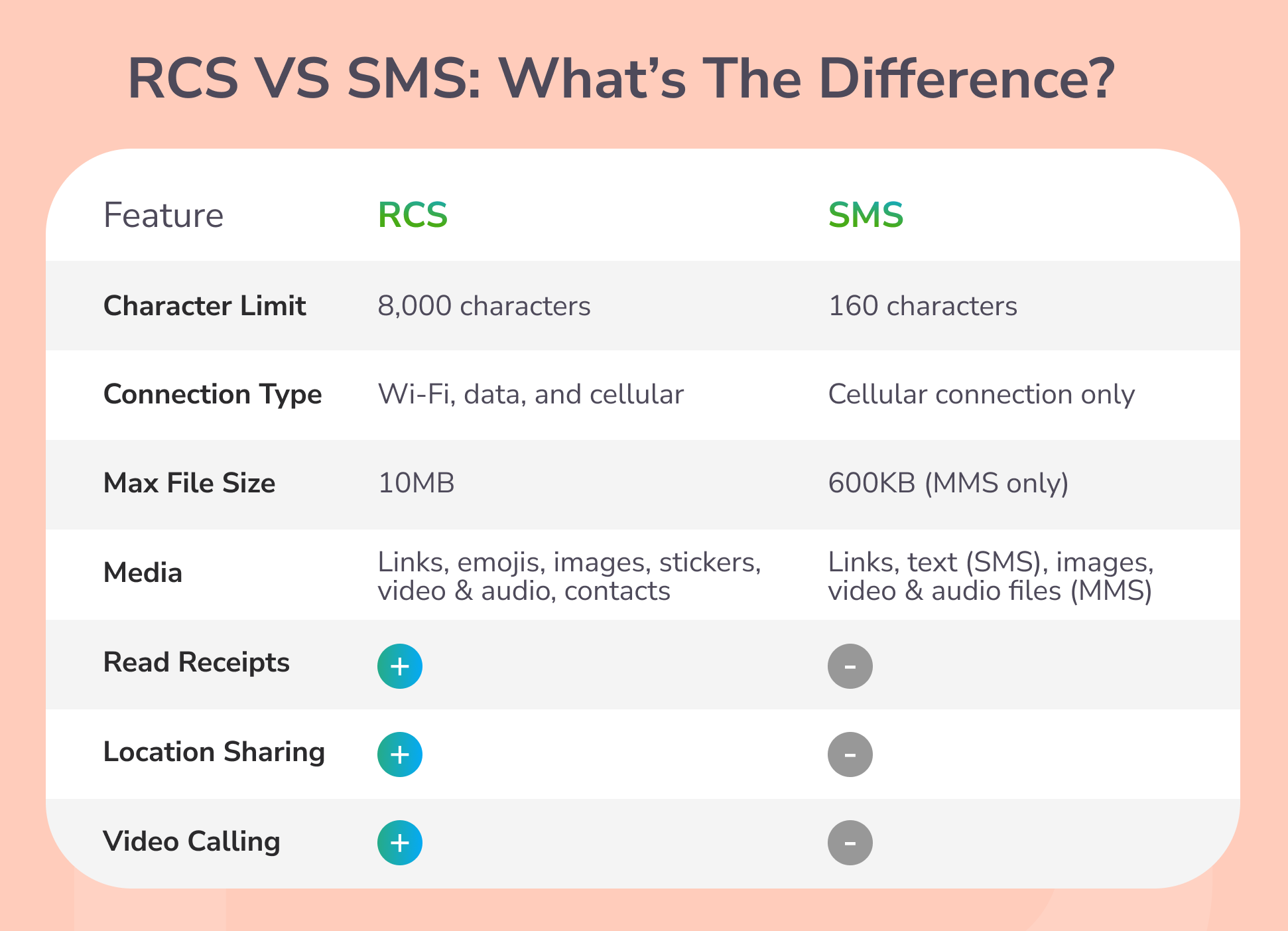
Both RCS and SMS offer effective ways to communicate with your customers. The key is understanding how you wish to interact with your customers and the type of information you want to gather from these interactions. This will help determine whether RCS or SMS messaging is the best fit for your business needs.
The Benefits of RCS for Businesses
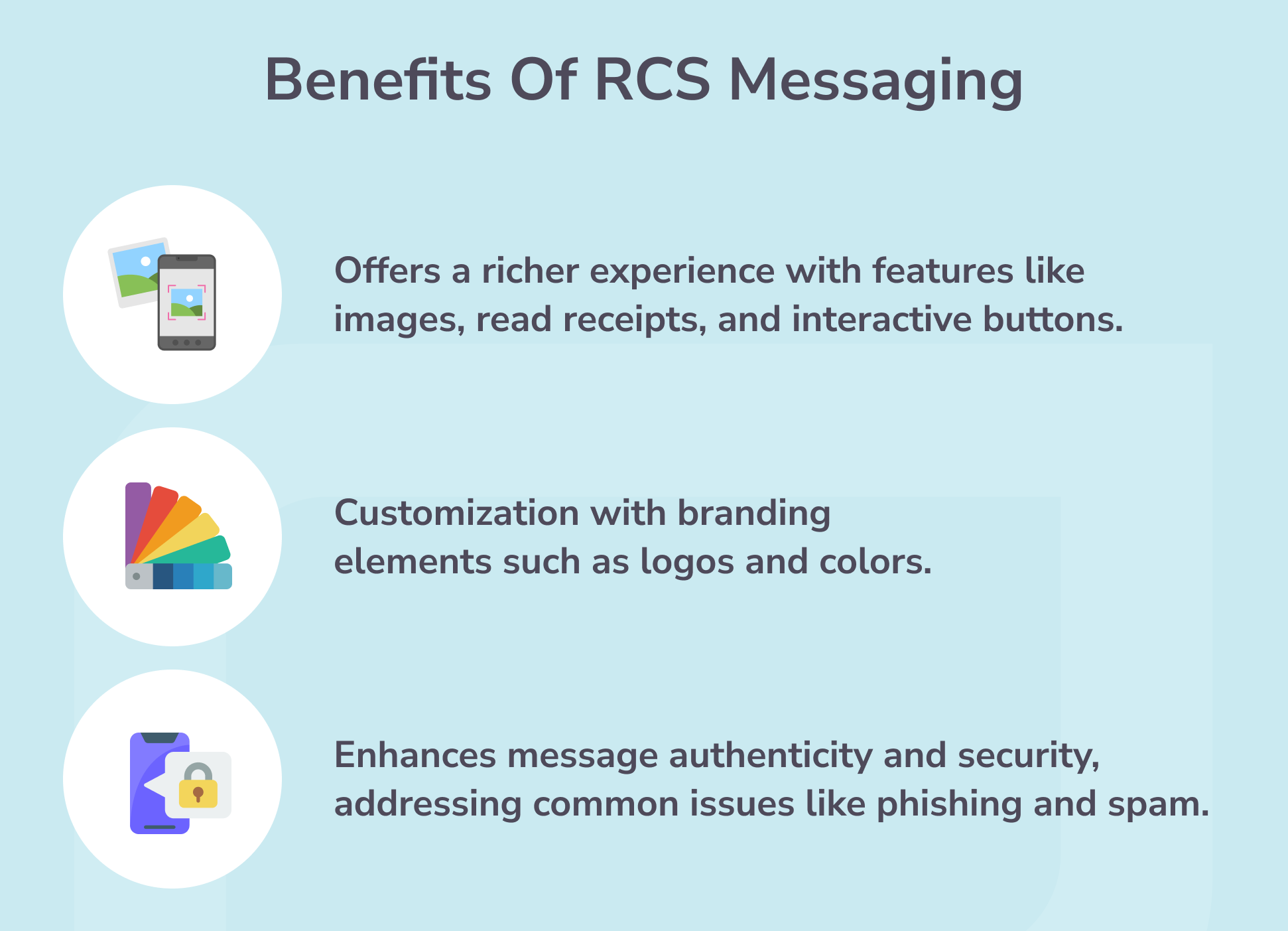
RCS business messaging offers several advantages, making it an attractive choice for brands looking to enhance their communication strategies.
Enhanced Customer Engagement
RCS provides a more engaging and interactive messaging experience compared to SMS.
Rich Media Support
Businesses can share high-quality images, videos, and other multimedia content, making their messages more appealing.
Interactive Elements
Features like reading receipts, typing indicators, and action buttons make communication more dynamic and responsive.
Improved Customer Support
Real-time support with rich media helps in quicker resolution of customer issues.
Higher Conversion Rates
Promotional messages with interactive elements tend to have higher engagement and conversion rates.
Future of RCS for Business
Predictions indicate that RCS will significantly shape the future of business messaging. As companies recognize the benefits of RCS chats, adoption rates are set to increase. This trend is driven by rising demand for better customer engagement tools and the clear advantages RCS offers over traditional SMS.
According to current statistics, traditional SMS users constitute 100% of messaging users, with 86% utilizing rich messaging platforms, while RCS business messaging users currently represent 26% of the market .
Reasons for Adoption
- Enhanced User Experience
- Integration with Native Messaging Apps
- Cost-Effectiveness
- Consumer Preference
- Support from Major Carriers and Platforms
The future of RCS messaging in business not only promises significant potential but also marks a pivotal shift in how businesses will effectively communicate with their customers. This evolution is poised to redefine customer engagement strategies, offering more dynamic and interactive ways to connect with audiences. As RCS continues to gain traction, businesses can anticipate enhanced communication capabilities that foster deeper connections and drive greater customer satisfaction and loyalty.
Final Word
In conclusion, RCS messaging is set to revolutionize the way businesses interact with customers. By combining the reliability of SMS with the rich features of internet-based messaging apps, RCS offers a superior communication experience. As the global RCS market continues to grow, businesses that adopt this technology can expect to see enhanced customer engagement, improved support, and higher conversion rates. With RCS, the future of business messaging is not only richer but also more interactive and effective.


Interested in a special offer?
Ready to reach further?
Let’s talk


Related Terms
Explore BSG Solutions
Useful Materials
![WhatsApp Business API: Complete Guide — Setup, Pricing, Use Cases [2026]](/assets/img/blog/whatsapp-business-api-setup-pricing-use-cases-guide_avatar.jpg)
WhatsApp Business API for 2026 — setup steps, the new per-message pricing model, and proven use cases by industry.
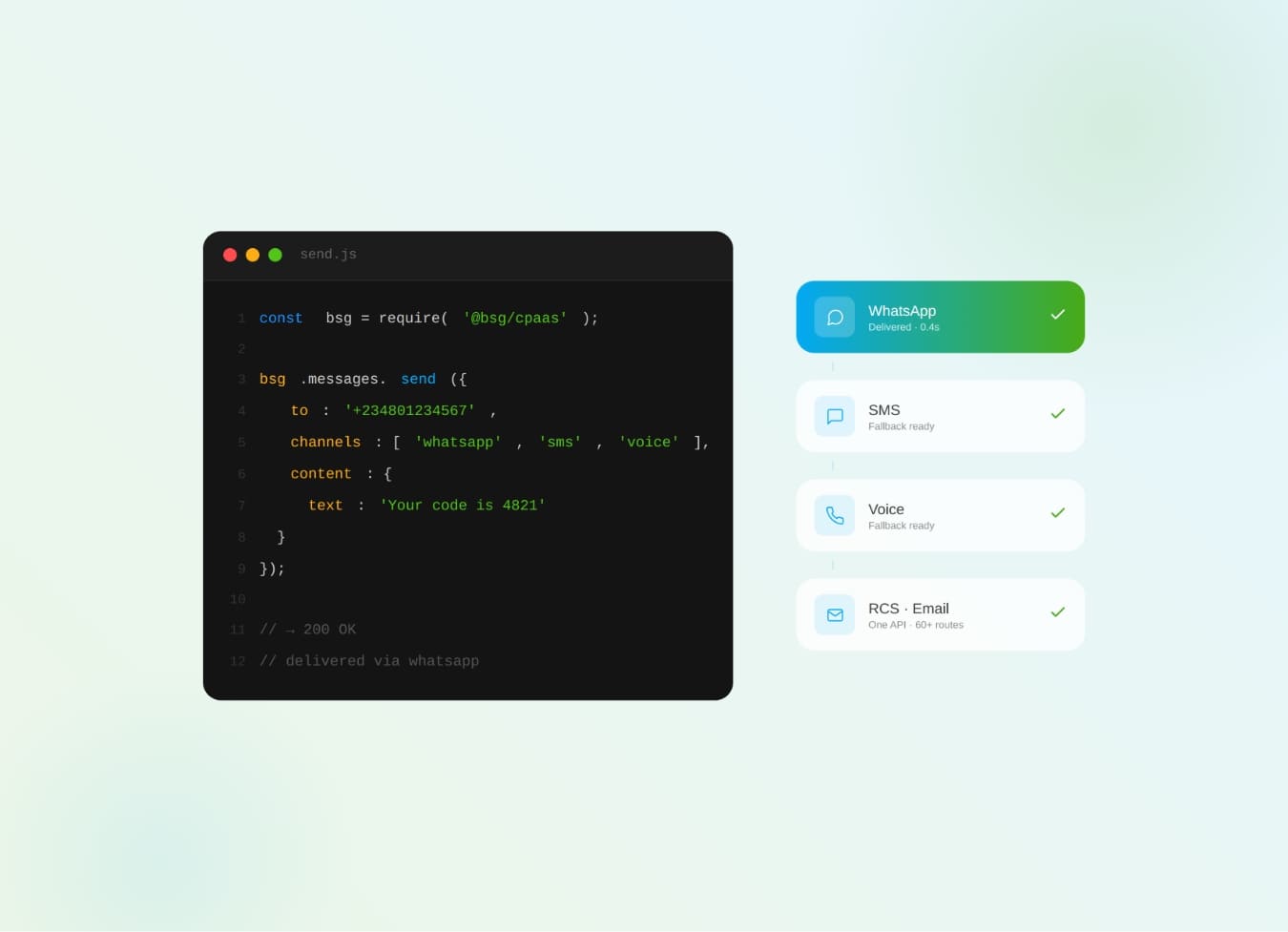
What is CPaaS? The cloud API layer that adds SMS, WhatsApp, voice & OTP to your apps — how it works and why it beats a multi-vendor stack.
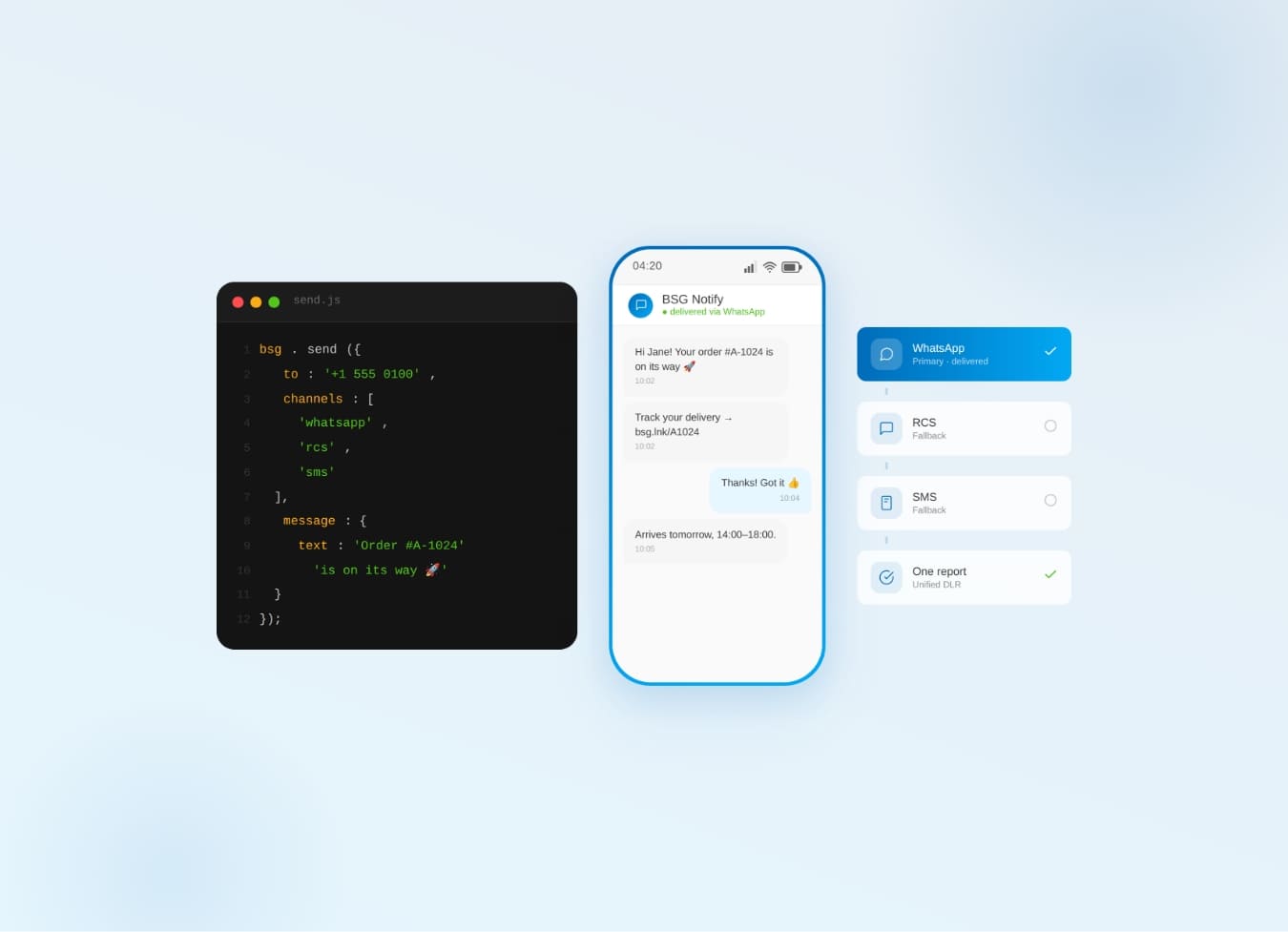
Why one communication API for SMS, WhatsApp, Viber & RCS beats five separate integrations — cascade fallback, unified reports.